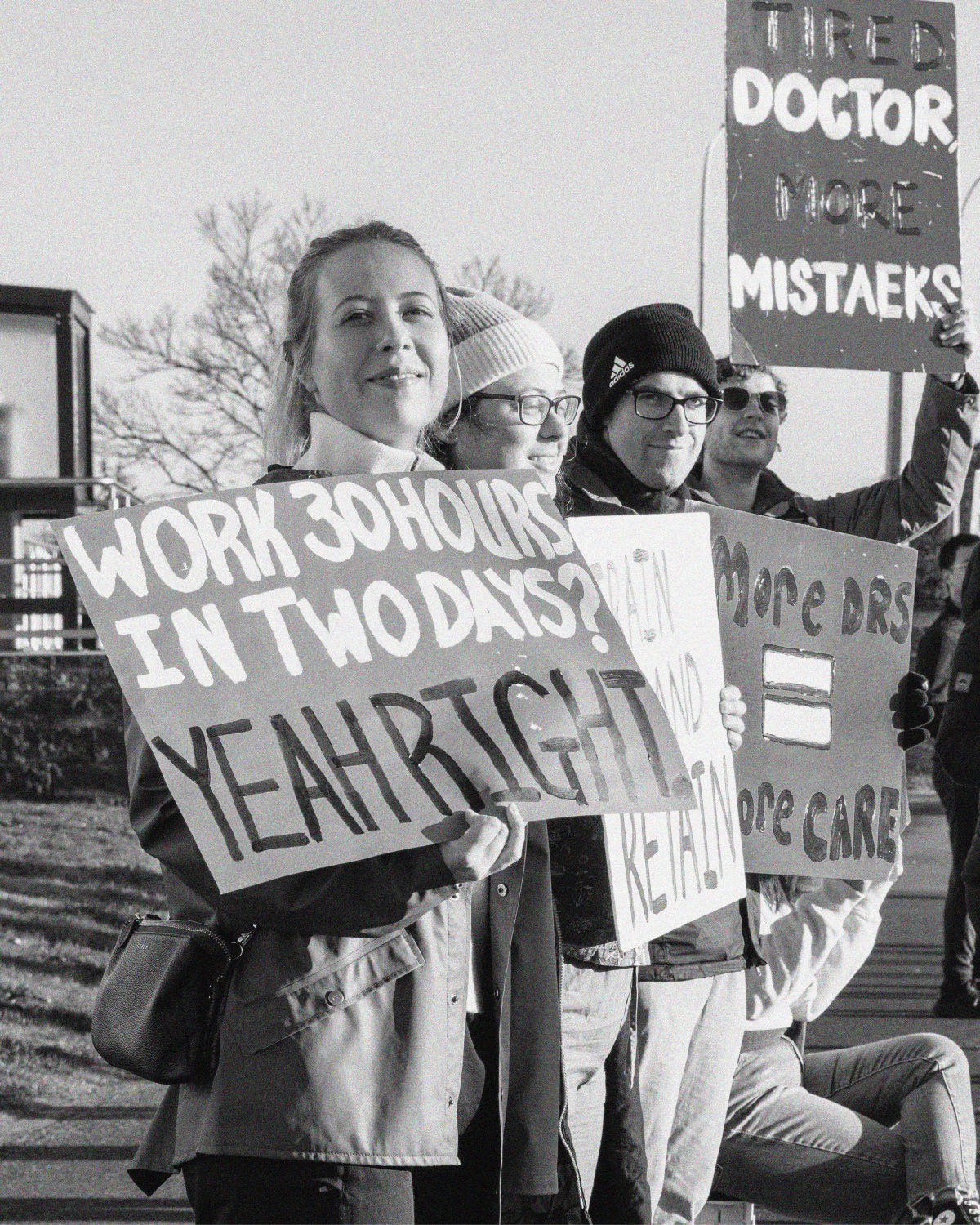
We keep it together
2026 Bargaining
Navigating Bargaining 2026
We work across our health system. From Kaitaia to Invercargill. Gisborne to Taranaki. Auckland to Greymouth.
Call back. Long day. Night shift. Sleep recovery. Swing shift. Mid shift. RDO. Add duty. Weekends on call. 72-hour weeks.
As we count down to exams, we cram study into every margin of our life. We can’t say we are thriving. But we are surviving.
For between six and twelve years, we work our way through specialist and GP training. If we show exhaustion or frustration, we get told, ‘don’t be afraid to cope’. And most of us do.
We have a system which knows the RMO pathway comes with unique hazards. But a system which does not always support us to get through and become the specialists and GPs that our communities and this country needs.
Collective bargaining allows us to make some changes in our collective agreement. As always, salary increases and roster improvements will be important to this bargaining. But we also want to do something different.
In 2026, NZRDA is committed to ensuring our collective agreement is updated in a way which allows for RMOs to get through their pathway in a safer, faster, more enjoyable
and efficient way.
Being part of our bargaining is about recognising we all win when our collective agreement and our health system is set up to accelerate RMOs through training, but not at a personal cost to ourselves and our families. To be supported in our employment, and to be paid fairly for our work.
2026 is about our system recognising RMOs are not peripheral to the health system. We are essential.
Relied on to deliver acute patient care 24 hours a day across nearly 100 hospitals. And expected to study and be assessed, from our last year of medical school to our first day as a senior doctor or GP.
We rise early to prepare for ward round. And we stay late for the midnight emergency. We help newborns take their first breath. And we listen for the last heartbeat. We treat patients waiting in overcrowded emergency departments. And accompany those transported alone to an ICU.
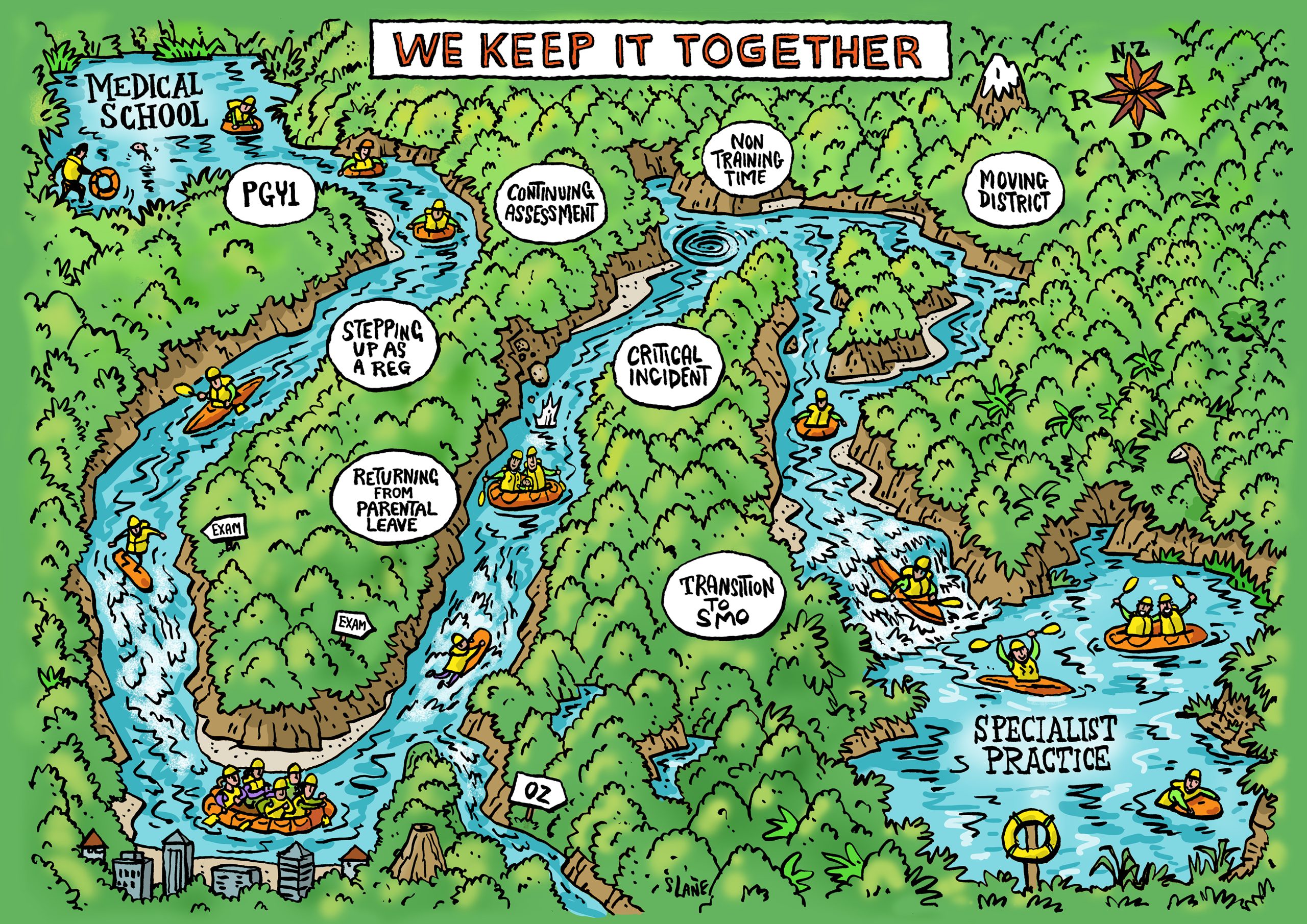
In order for us to keep on training, and keep on working, we need a collective agreement that better accounts for the unique challenges we face and provides us with the support we and our health system need. A collective agreement which reflects a simple truth about the RMO workforce: We keep it together.
RMO Workforce Data
Although overall RMO vacancy rates have eased slightly since 2023, continued focus and attention needs to go into improving recruitment and retention rates.
The latest workforce Data (December 2025) from Te Whatu Ora shows there remains at least 373 RMO positions vacant, including 213 registrar positions. Every missing registrar role means delayed or missed treatment, additional burden on colleagues, an unfilled training position, and ultimately fewer SMOs.
Registrar Vacancies
- 60 medical registrars
- 33 surgical registrars
- 27 psychiatry registrars
- 22 ED registrars
- 15 paediatric registrars
- 13 O&G registrars
- 8 ICU registrars
Our 2026 survey of RMOs found:
- 24% of RMOs report not having enough RMOs on their roster
- 83% of RMOs report patient care being compromised by a lack of RMOs
- 91% of RMOs report RMO wellbeing is at risk as a result of a lack of RMOs
RMOs are severely burnt out. The mental and physical toll is clear to see with myself and many colleagues. Patients are constantly at risk. Care is being delayed due to waiting hours and hours for admission and then being seen the next afternoon/evening at the end of a long post take ward round. There are countless events of inadequate patient care due to this.
Services, Innovation & Productivity
We asked RMOs for their views on improving services, innovation and productivity, which included:
- More SHO roles to bridge the gap between house officer and registrar roles.
- Electronic notes, prescribing, referrals, lab and radiology requests and charting.
- Digital infrastructure such as payroll, leave management and rostering.
- AI scribes/digital note taking and talk-to-text dictation.
- Sufficient computer and office facilities including work phones, tablets and laptops.
- Transform towards 7-days a week services.
- National standardisation of e-referrals, e-meds and clinical documentation templates.
- Establish improvement committees with RMO participation.
- Use apps or surveys for patients to indicate short notice availability to reduce DNAs.
House officers waste the majority of their time on computers completing paperwork on systems that don’t work effectively.
All hospitals need to be using the same online portal and all using online prescribing. Paper is tedious and very error prone particularly with handwriting being misinterpreted.
Rural and Community Hospitals
The 2024 collective agreement brought RMOs onto one salary scale with a 5% per annum allowance payable at the following hospitals classified as rural:
Current Hospitals
- Dargaville
- Kaitaia
- Kawakawa
- Taumarunui
- Te Kūiti
- Thames
- Tokoroa
- Taupō
- Hāwera
- Dannevirke
- Wairoa
- Greymouth
- Westport
- Kaikōura
- Ashburton
- Queenstown
Since then, we have identified nine additional hospitals which would benefit from an additional incentive payment to reflect the rurality, isolation or difficulty of practice in these areas:
New Hospitals
- Timaru (23% vacancy rate)
- Oamaru
- Kenepuru
- Gisborne (11% vacancy rate)
- Wairau (50% vacancy rate)
- Whakatāne (17% vacancy rate)
- Wairarapa
- Whanganui (14% vacancy rate)
- Balclutha
- Gore
- Dunstan
Payment for Sleep Recovery Days
One of the major issues we have to deal with in the upcoming bargaining is the looming ‘sunset’ or expiry of payment for sleep recovery days in the run review methodology.
This is clause 8.1.2 (b) and it’s important all RMOs understand the importance of this clause for how run reviews calculate run categories. If the change, currently set for January 2027 for the RDA collective agreement takes place, our estimate is that around 50% of runs will drop a category.
The only three groups of runs which will not be impacted are:
- Shift rosters,
- Runs which have no night shifts, or
- Runs with seven nights in a row, and have all sleep recovery days on the weekend
NZRDA national executive has resolved to bargain to remove the ‘sunsetting’ of 8.1.2 in our collective agreement negotiations in June 2026, so all members have certainty around pay rates and run categories for the 2026 and 2027 RMO year.
Salaries
Salary increases will be important to this bargaining, as always. NZRDA is currently calculating an appropriate pay claim. The claim will take into account relativity issues, cost of living changes and workforce pressures.
NZRDA Bargaining Priorities for 2026
To create a well, well trained and productive RMO workforce, we have to improve the supports for RMOs during the most arduous parts of the pathway.
PGY1
- Ensure all House Officers get at least 3 hours protected training per week.
- Phase out double weekend long days.
Stepping up as a Reg
- Buddy system for new registrars for out of hours work.
- Consistent departmental orientation.
Examinations
- 2 weeks of guaranteed exam leave immediately before a significant exam, and 4 weeks of no nights or weekends.
- Increase total Medical Education Leave from 12 to 20 weeks.
- Ensure all registrars are getting 4 hours protected teaching time.
Returning from Parental Leave
- Part time employment and job-sharing options.
- Flexibility with childcare start/ finish times.
Moving Districts
- Comprehensive orientation to arriving RMOs including to IT and clinical systems.
- Automatic transfer of leave balances and vaccination records.
- Improve RMO choice and Te Whatu Ora support and planning for disruptive moves.
Fellows & Senior Registrars
- A fellow pay step in the RDA collective agreement equivalent to ASMS step.
- Increasing conference leave and funding.
Transition to SMO
- Job security. Guaranteed promotion to an SMO role for all NZ- vocationally trained RMOs.
- The ability to secure SMO roles in advance of completing training.
GPEP
- Ensuring GPEPs have bespoke and attractive terms and conditions.
Training
- Maximising training positions available in our public health system.
Resources